Late winter wild greeens
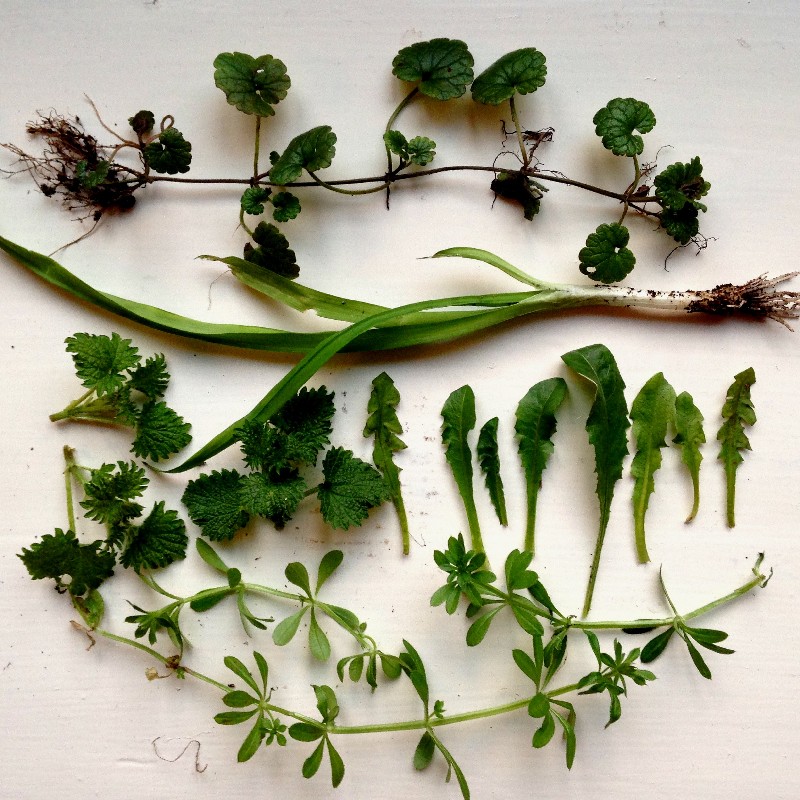
There are a surprising number of tasty wild greens to forage in these late winter months.
Here are some that grow plentifully around most gardens / allotments. Many of them are best eaten raw in salad, but a couple are good for cooking or making into tea.
From top to bottom in the photo:
Ground ivy, Glechoma hederacea Apparently one of Britain's most common plants, it grows in damp and shady conditions, spreading rapidly. It's not actually an ivy, it's in the mint family (you can tell this from its square stem) and it can be used as a substitute for thyme, mint or rosemary. It has small, aromatic leaves which you can eat raw or cook lightly, or make into a tea.
Three cornered leek, Allium triquetrum If you have this in your garden, you proably have it in abundance. It seems to spread quicker than almost any other plant. The flower stems are triangular, hence the name. It tastes a bit like garlicky spring onion, baby leeks or chives. All of the plant is edible. I like to slice a whole one and add it to an omlette. The white flowers that come later in spring are good as a soup garnish, or in a salad.
Stinging nettles, Urtica dioica The young plants are just staring to show, and at this point in the season, just pick the top couple of leaves. They're best lightly cooked (which removes the sting). Drop the leaves very briefly into boiling water, then drain. They taste like spinach only much, much nicer.
Dandelion, Taraxcum It's too early for the highly recognisable yellow flowers, but the leaves are also un-mistakable. Pick the smallest leaves, just a couple from each plant, and add to salads. They're a little bitter but delcious in small amounts.
Cleavers, Gallium aparine When young, these can also be added to salads and they have a delicate flavour. As the plants grow, they become a bit rough to eat, and that's when I start juicing them. But right now they're tender.
Avoid uprooting a cleaver plant, just take a few of the top leaves, so that the plant can keep growing. Aka sticky weed, goose grass, sticky willy.
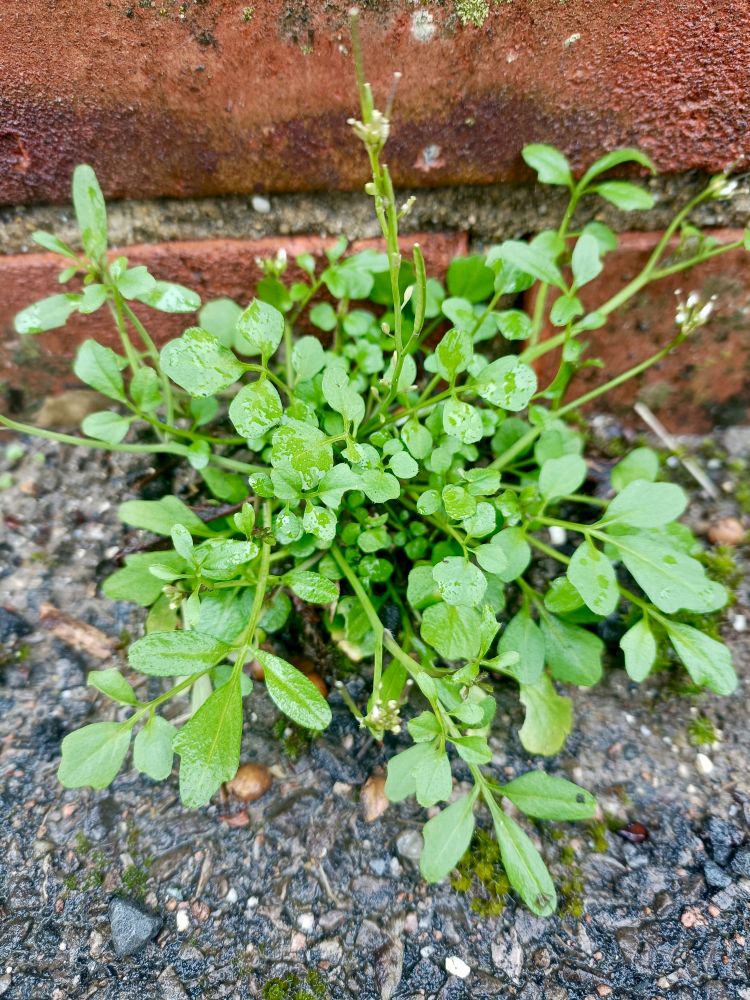
This little plant growing at the base of a wall is hairy bittercress, Cardamine hirsuta, and it's an all time favourite of mine. It grows very easily and widely in all sorts of nooks in the garden. Recognisable by the way it grows as a rosette (up to about 9cm diameter) with very small white flowers and later, thin seed pods that scatter seeds widely.
It tastes like watercress (but not as spicy). To check if what you have is indeed hairy bittercress, just give the leaf a little nibble and the taste will tell you.
I pick a few leaves from each little plant and eat them raw, either as salad or added to pesto.
It has lots of other common names including Lambs Cress, Land Cress, Spring Cress, Hoary Bittercress, Shot Weed, Flick Weed.
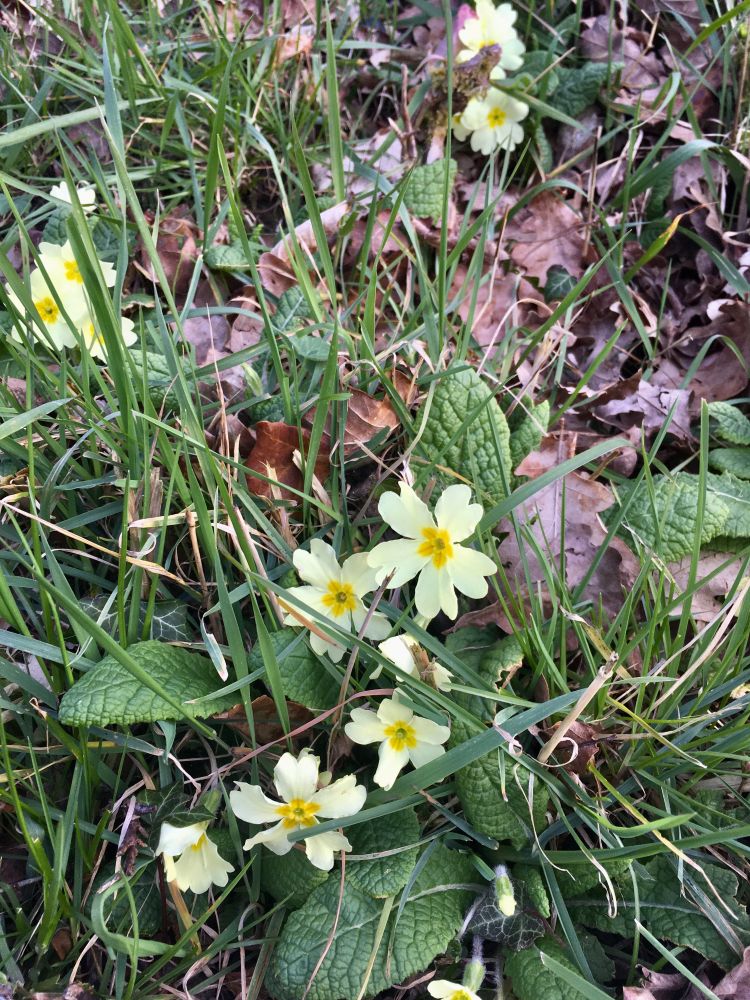
Primroses, Primula vulgaris These are beginning to show now, and a few young leaves can be added to a salad. As the highly recognisable yellow flowers emerge, they can also be gathered to eat.
It's advisable to pick young leaves of the primrose only when the plant is in flower, to ensure correct ID.
As always when foraging, avoid uprooting any plant (except, in this case, the 3-cornered leek).
And check that the plants are growing in places where they're not polluted... by dogs, traffic, agricultural spraying, human footfall etc.
On Native Hands' Wild Basketry and Wild Pottery courses, lunch includes foraged wild greens or herbs to add to the soup cooked on the fire and / or for the communal tea pot.